Overview of the Bottling Process
The bottling process is a crucial step in the production and packaging industries, serving as the final phase where products are securely enclosed in bottles for distribution and sale. This process not only ensures the product’s safety and quality but also plays a vital role in its presentation and marketability.
At its core, the bottling process involves filling bottles with liquids or other products, sealing them, and then preparing them for shipment on a production line. This systematic process combines precision machinery and skilled labor to maintain consistency and efficiency throughout the packaging stage. Whether it’s beverages, pharmaceuticals, or other liquid goods, the bottling process guarantees that the product reaches the consumer in its intended form and freshness.
One key aspect of the bottling process lies in its ability to maintain product integrity. Proper bottling prevents contamination, leakage, and spoilage, thereby preserving the quality that the brand promises. This is particularly important in industries such as food and beverage, where hygiene and safety are non-negotiable standards.
Moreover, the bottling process is integral to the overall production line. It acts as a bridge between manufacturing and distribution, coordinating seamlessly with earlier stages like formulation, mixing, and quality control. With the help of automated systems, the bottling line maximizes output, minimizes human error, and reduces production downtime, which translates to cost savings and increased efficiency.
In addition to functionality, bottling also impacts branding and consumer experience. The choice of bottle shape, label placement, and sealing method contributes to the product’s appeal on the shelves. Packaging specialists work closely with bottling teams to ensure that the design and logistics align perfectly for enhanced shelf presence and customer satisfaction.
In summary, the bottling process is much more than just filling bottles; it is a vital component of production and packaging that safeguards product quality, supports efficient workflow on the production line, and reinforces brand identity. Its careful execution is essential for delivering products that meet consumer expectations and regulatory requirements alike.
History and Evolution
The history and evolution of bottling technology reveal a fascinating journey of innovation and refinement. In the early days, bottling was a manual and labor-intensive process, relying heavily on glass bottles hand-blown by skilled artisans. This era marked the beginning of the bottling industry, laying the groundwork for future advancements. Over time, the demand for efficient and consistent bottling methods spurred the development of automated machinery, transforming production capabilities dramatically.
The 19th century saw key innovations such as the introduction of the crown cork invented by William Painter in 1892, which revolutionized the sealing of bottles and improved product preservation. This was a pivotal moment in bottling technology, enabling better storage and transportation of beverages. As bottling techniques evolved, the use of machine-made glass bottles became widespread, drastically increasing production speed and uniformity in bottle shapes and sizes.
In the 20th century, advancements in materials and machinery further accelerated the evolution of bottling. The switch from glass to plastic bottles in many industries introduced new possibilities for lightweight, durable packaging. Innovations such as automated filling lines, labeling machines, and quality control systems have enhanced efficiency and hygiene standards, shaping modern bottling into a highly technical and automated process. These technological leaps showcase how continuous innovation in bottling technology has been essential in meeting the growing demands of various industries worldwide.
Types of Bottling Methods
The bottling process varies significantly depending on the scale and nature of the operation. There are three main types of bottling methods: manual bottling, semi-automatic bottling, and fully automatic bottling. Each method has its unique advantages and is suited to different production needs.
Manual bottling is one of the oldest methods and involves human effort to fill and seal bottles. This type is typically used by small-scale producers or artisanal businesses. It allows for precise control and flexibility but is time-consuming and less efficient for large volumes. An example includes hand-filling wine bottles during small vineyard productions.
Semi-automatic bottling combines manual labor with mechanized processes. In this method, machines handle tasks such as filling or capping, but human operators oversee and perform other functions like bottle placement and quality checks. This method balances efficiency and cost, making it popular in medium-sized operations, such as craft breweries using semi-automatic filling machines.
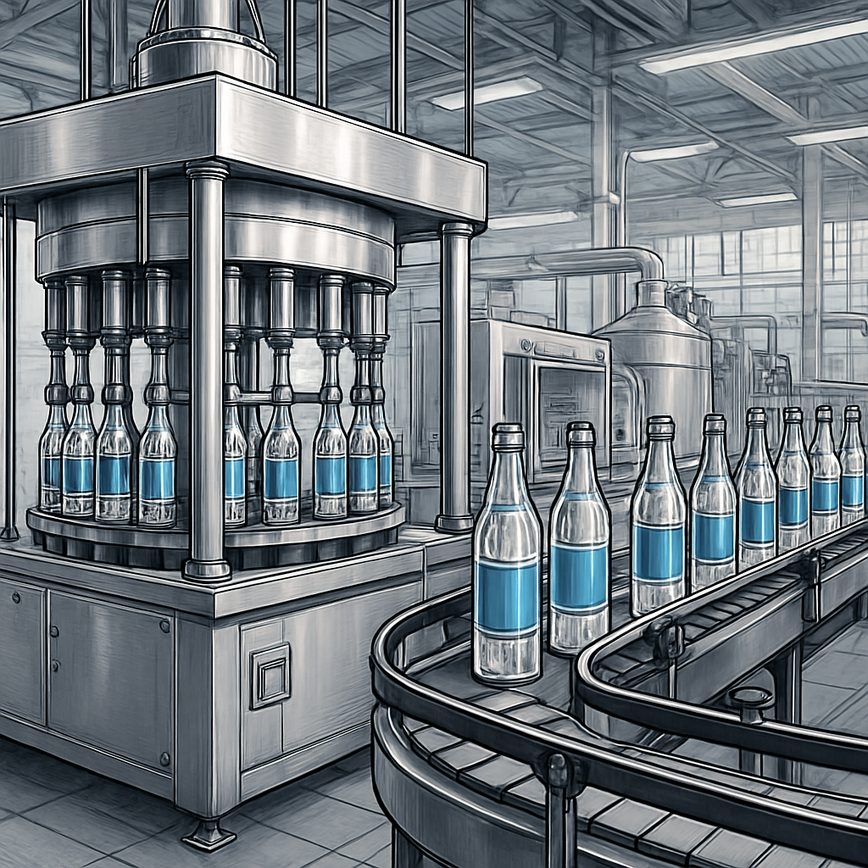
Fully automatic bottling is employed in large-scale industrial settings. Automatic bottling lines handle every step of the process from rinsing, filling, capping, labeling to packaging. These systems maximize speed and consistency, essential for mass production. Examples include soft drink manufacturers and large wineries that use state-of-the-art automatic bottling machines for high-volume output.
Understanding these types and methods helps businesses choose the right bottling solution that aligns with their production capacity and budget, whether manual, semi-automatic, or fully automatic bottling is the most suitable option.
Step-by-Step Bottling Process Explained
The bottling process is a crucial stage in the production line, ensuring the product is securely packed and ready for distribution. Understanding each step helps to appreciate the complexity and precision involved. Here is a detailed breakdown of the bottling steps from start to finish.
The first step is preparing the bottles. This involves cleaning and sterilizing every bottle to eliminate any contaminants that could affect the product’s quality. Proper sanitization guarantees that the contents remain pure throughout their shelf life.
Next comes the filling stage, where the product is carefully dispensed into the bottles. This step requires precision to ensure each bottle is filled to the exact volume required, avoiding both overfilling and underfilling. Automated filling machines are often used for this purpose as they increase efficiency and maintain consistency.
Once the bottles are filled, they move to the capping stage. This involves placing and sealing caps securely onto each bottle to preserve and protect the contents inside. Proper capping prevents leaks, contamination, and spoilage, maintaining the product’s integrity during transport and storage.
Following capping, the bottles are often labeled and coded. Labels provide essential information such as product details, batch numbers, and expiry dates. This step is vital for compliance with regulatory standards and helps in tracking the product throughout the supply chain.
Finally, filled and sealed bottles undergo quality control checks. Inspectors verify that the filling levels, capping, and labeling meet quality standards. Bottles that pass the inspection are then packaged into cartons or crates for shipment.
In summary, the step-by-step bottling process includes preparation, filling, capping, labeling, and quality control. Each of these bottling steps ensures that the final product is safe, attractive, and ready for consumers.
Bottle Preparation and Cleaning
The bottle preparation and cleaning process is a critical step to ensure the safety and quality of the final product before filling. The first procedure involves visually inspecting each bottle for any cracks, chips, or defects that could compromise integrity. Following inspection, bottles undergo a thorough cleaning to remove dust, dirt, and any residues that may have accumulated during storage or transportation.
Cleaning typically involves multiple stages, starting with a rinse using filtered water to flush out any loose particles. Next, a specialized cleaning solution is applied, which is specifically formulated to break down organic and inorganic contaminants without leaving harmful residues. The bottles are then rinsed again to ensure all cleaning agents are completely removed.
Sanitization is the final and essential step in the bottle preparation process. It is carried out by exposing the bottles to steam, hot water, or chemical sanitizers that eliminate any remaining microorganisms. This step guarantees that bottles are hygienically safe for the filling process, preventing contamination and spoilage of the product.
Throughout the entire bottle preparation and cleaning procedure, rigorous quality control measures are in place. These include monitoring the effectiveness of cleaning agents, verifying the sanitization parameters, and conducting random microbial tests on bottles. Together, these procedures ensure that every bottle meets the highest standards of cleanliness and safety before it is filled.
Filling and Sealing
The filling process is a critical stage in bottling that ensures each bottle is filled accurately and hygienically. There are various types of fillers used in the industry, including gravity fillers, piston fillers, and vacuum fillers. Gravity fillers rely on gravity to fill bottles and are typically used for thin, non-carbonated liquids. Piston fillers, on the other hand, use a piston mechanism to push precise volumes of liquid into each bottle, making them suitable for thicker or viscous products. Vacuum fillers create a vacuum inside the bottle to draw in the liquid, which is ideal for carbonated beverages as it prevents foaming during filling.
Sealing is equally important to maintain product freshness and prevent contamination. Various methods are employed based on the bottle type and product requirements. Common sealing methods include screw caps, corks, crown caps, and heat seals. Automation plays a significant role in both filling and sealing; modern equipment integrates these processes with precision, speed, and minimal human intervention. Automated filling lines often include sensors and control systems to monitor volumes and ensure consistent quality. Similarly, sealing machines apply caps or closures securely, whether by mechanical torque or heat application, enhancing the overall efficiency and reliability of the bottling process.
Labeling and Packaging
The labeling and packaging stage is a crucial part of the bottling process that ensures products are ready for shipment and retail distribution. Labeling serves not only to provide essential information such as product name, ingredients, and regulatory details but also plays a significant role in branding. High-quality labels reflect the product’s identity and help differentiate it on store shelves, making an impact on consumer choice.
During this stage, bottles are carefully labeled using automated machinery that applies labels with precision to maintain consistency and aesthetic appeal. This process also involves inspecting labels to ensure accuracy and adherence to brand standards. Effective labeling facilitates compliance with distribution and retail requirements, aiding in smooth logistics and sales management.
Packaging is equally important and involves selecting materials that protect the bottles during transit while enhancing their visual appeal. Common packaging options include boxes or crates with cushioning to prevent damage. Packaging design complements labeling and branding by creating a unified look that attracts customers and strengthens brand recognition.
Once labeled and packaged, bottles are grouped and prepared for shipment, streamlining the distribution process. Well-executed labeling and packaging ensure products arrive safely at their destinations and are shelf-ready for retailers, facilitating efficient inventory management and promoting brand loyalty among consumers.
Challenges and Innovations in Bottling
The bottling process is a critical stage in manufacturing and packaging industries, but it faces several challenges that demand innovative solutions. One of the major challenges is sustainability, as traditional bottling methods often consume large amounts of energy and resources. Reducing waste and minimizing the environmental impact has become a high priority for manufacturers worldwide. This shift drives the adoption of more sustainable materials and eco-friendly practices.
Technology plays a crucial role in overcoming these challenges. Advances in automation and smart machinery have streamlined bottling lines, increasing efficiency and precision. Automated systems reduce human error and enable real-time monitoring to detect and address issues immediately. Innovations such as robotic arms and AI-powered inspection systems ensure each bottle meets quality standards without slowing down production.
Another concern in bottling is the integrity and safety of the product. Bottles must be sealed properly to preserve freshness and prevent contamination. Recent technological innovations have introduced advanced sealing techniques and improved materials that enhance the longevity and safety of bottled products. For example, new polymer blends and biodegradable plastics have been developed to replace conventional plastics, aligning with sustainability goals without compromising functionality.
Moreover, smart packaging solutions embed sensors and tracking technology in bottles, enabling companies to monitor product conditions throughout the supply chain. These innovations increase transparency and allow better control over inventory, logistics, and product quality. The integration of blockchain and IoT further enhances traceability, reassuring both manufacturers and consumers about the authenticity and safety of bottled goods.
In conclusion, the bottling industry is rapidly evolving thanks to technological advancements that address its biggest challenges. By adopting innovative and sustainable solutions, manufacturers can improve efficiency, reduce environmental impact, and ensure product safety. The ongoing focus on technology and sustainability promises a future where bottling processes are smarter, greener, and more reliable than ever before.
Sustainability in Bottling
Sustainability in bottling is a critical focus as the environmental impact of packaging continues to gain attention. Many bottling companies are actively seeking eco-friendly packaging solutions to reduce waste and minimize their carbon footprint. This involves using materials that are recyclable, biodegradable, or sourced from renewable resources. For example, companies are increasingly adopting glass bottles made from recycled content, lightweight plastics that require less material, and even biodegradable film wraps.
Recycling plays a fundamental role in this sustainable approach. By encouraging consumers to recycle bottles and packaging, the industry can reduce the demand for virgin materials and limit landfill waste. Innovative recycling programs and partnerships help ensure that packaging materials are collected, processed, and reused efficiently. Additionally, some producers implement refillable bottle systems, which further reduce the need for single-use packaging and promote circular economy principles.
Efforts to address sustainability also extend to the entire bottling process, including reducing energy consumption, optimizing transportation to decrease emissions, and adopting greener manufacturing technologies. By integrating sustainability into every stage of bottling, companies demonstrate their commitment to environmental stewardship while meeting consumer demand for responsible products.
Technological Advances
The bottling industry has undergone significant transformation thanks to technological advances, particularly in the realms of automation, AI, and smart bottling systems. Automation has revolutionized production lines by streamlining repetitive tasks, reducing human error, and increasing throughput. Conveyor belts equipped with sensors and robotic arms perform precise filling, capping, and labeling at speeds unmatched by manual labor.
Artificial intelligence (AI) enhances this process further by enabling real-time monitoring and predictive maintenance. AI algorithms analyze data collected during bottling to detect anomalies, ensure quality control, and optimize machine performance. This leads to fewer defects and reduces downtime, resulting in higher efficiency and cost savings.
Smart bottling technologies integrate Internet of Things (IoT) devices allowing seamless communication between machines and centralized control systems. This smart connectivity provides detailed insight into every stage of bottling, from material handling to packaging. Operators can remotely adjust parameters and respond swiftly to issues, ensuring consistent product quality and adherence to safety standards.
Together, these technologies enhance not only the speed and accuracy of bottling but also sustainability by minimizing waste and energy consumption. As the industry continues to embrace technology, companies adopting smart bottling solutions will lead the way in delivering superior products with unmatched efficiency.

Winemaker with 12 years in the cellar. I write about fermentation, terroir, and the honest mistakes that taught me more than any textbook. I’ve ruined more barrels than most people have tasted. That’s not a disclaimer — that’s a résumé. Twelve years making wine in France, now making sense of it in words.